Clear the Area & Put Fabric Down
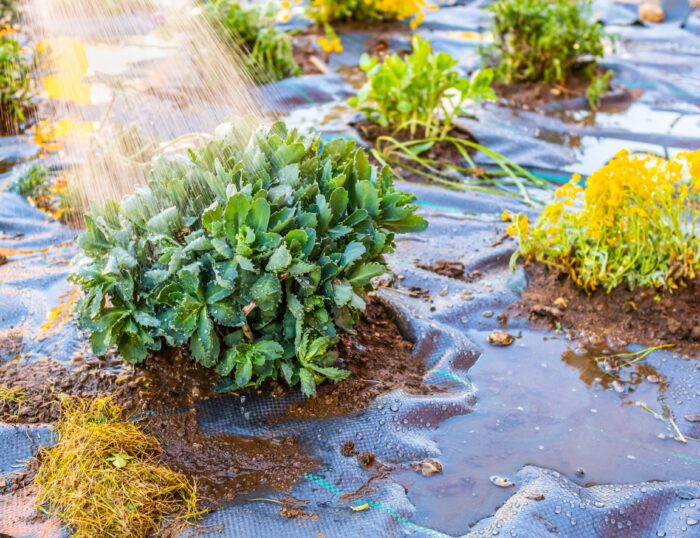
Start by getting rid of any weeds or obstructions in the area. This also reduces the need to regularly get onto an uneven area to remove unwanted growth. Next, place landscaping fabric down. In addition to maintaining sufficient drainage and deterring future weed growth, the friction created by the fabric helps keep the decorative rocks in place. This is especially important for smaller rocks, and it answers questions like how to keep gravel from washing away on a slope or how to stop gravel moving on a slope.
Put Low-Maintenance Plants between the Decorative Rocks
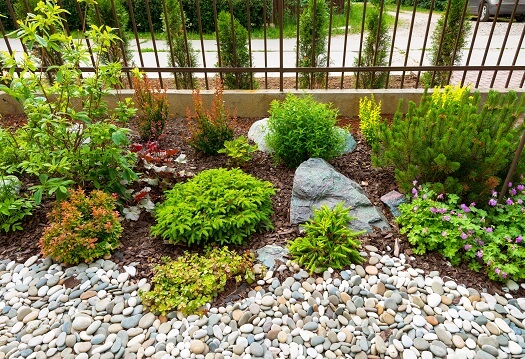
If landscaping fabric doesn’t provide enough support, another way to keep your decorative rocks in place is to strategically insert low-maintenance plants between them. Opt for plants that won’t require excessive watering and grow back annually. This method helps stabilize rocks and is useful for hillside landscaping. Tips include:
- Using plants of varying sizes and shapes
- Placing them where slippage is likely
- Creating a pattern that shifts downward water flow
This technique also helps with hillside landscaping with river rock on a slope or rock garden on a slope.
Get Extra Support from Concrete or Sand
Landscaping rocks on uneven terrain don’t always have to be large. Smaller stones or pebbles are easier to wedge into place or support with surrounding plants. However, for larger or heavier rocks, concrete or sand can provide the necessary support. This method is helpful when building sloped rock retaining walls or hillside reinforcement areas.
Consider Adding Steps or a Walkway to the Area
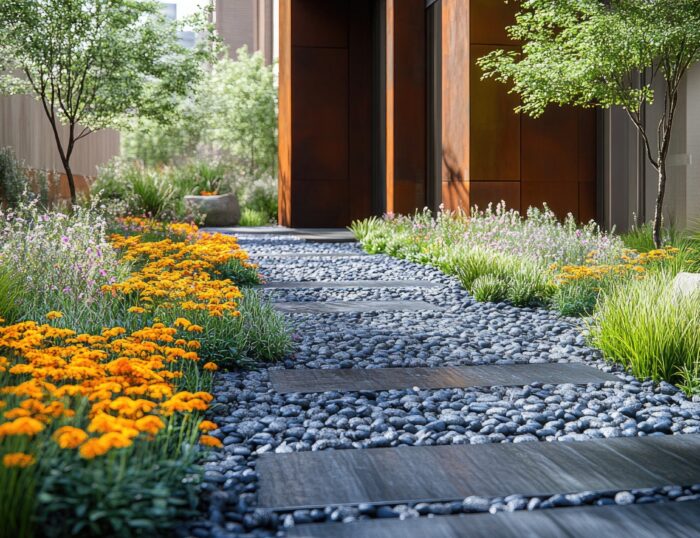
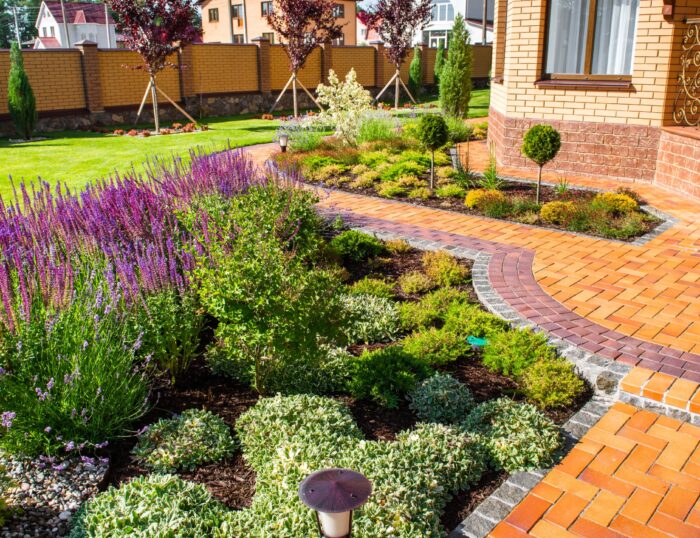
Another design option is to add steps or a walkway on a hilly surface. Decorative rocks can still be placed on the sides to achieve your desired look. Steps or walkways reduce stress in the area to prevent significant movement and help stop rocks from rolling down a hill. This method is useful for rock steps on slope or rock slope landscaping projects.
Install Edging
Landscape edging creates a root and rock barrier. On a slope, run the edging sideways rather than downward. Properly installed landscape edging provides extra support, minimizes erosion, and reduces the risk of sliding. This is especially effective for keeping rocks on slopes landscape secure.
Mix Things Up with Decorative Rock/Stone Size
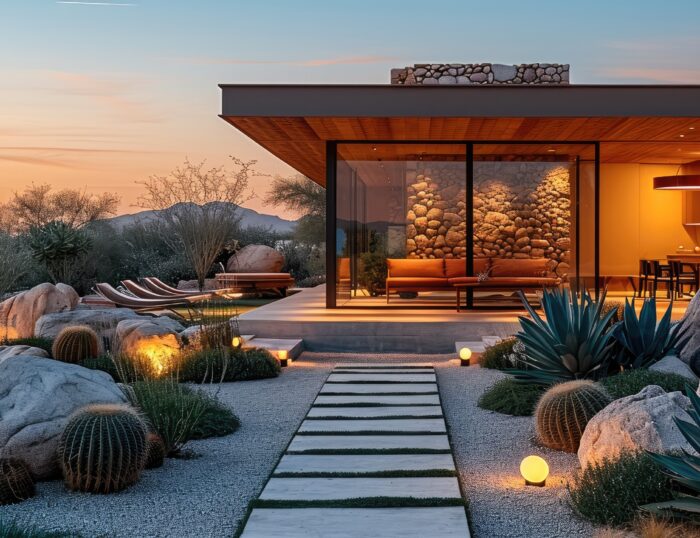
Place smaller decorative rocks, such as gold or white pebbles, to provide support for larger stones. Alternating stone size also creates an attractive pattern, turning the slope into a nice focal point. The key is to be mindful of rock size and shape to maintain stability from top to bottom. This approach is ideal for rolling rock landscape, hillside rock landscaping, or rock netting slope protection.
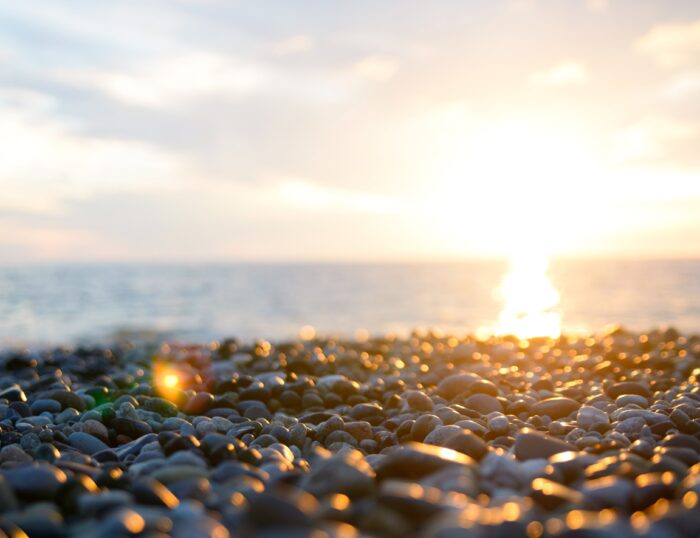
No matter what kind of landscaping project you’re planning, decorative rocks and beach pebbles add depth, character, and beauty. Whether you’re looking for a rock garden on a slope, the highest-quality river rocks, or Mexican beach pebbles, reach out to the experts at RS&P Rock Stones & Pebbles, a premier river rock and supply superstore. To learn how we can help you create the landscape of your dreams, call us today at (866) 380-0770.